We look forward to welcoming Lucie Flek, Wolf Vollprecht, and Thomas Kluyver as keynote speakers at NOBUGS2026.
Prof. Lucie Flek

Lucie Flek is a professor at the University of Bonn, where she leads the Data Science and Language Technologies group. Her research centers on machine learning for natural language processing, focusing on AI safety, robustness, and applications ranging from large language models and dialogue systems to clinical text analysis, mental health, misinformation, and social media. With experience spanning both academia and industry, she has led language understanding projects at Amazon Alexa and helped launch Google Shopping Search in Europe. She earned her PhD at TU Darmstadt on tackling meaning ambiguity in deep learning and has held research roles at the University of Pennsylvania and University College London. Earlier in her career, she even contributed to particle physics research at CERN, studying axion searches.
Thomas Kluyver

Thomas started his career as a plant biologist, but during his PhD he began to contribute to open source software. Then a chance came up to do a postdoc working on the IPython project, and what was soon to become the Jupyter Notebook. Working on programming full time, he has created and contributed to a wide range of projects, from scientific libraries to packaging tools, command line utilities and GUIs. Now employed at European XFEL, he is, among other things, one of the main maintainers of h5py, a widely used Python library for working with HDF5 files.
Julian Hofer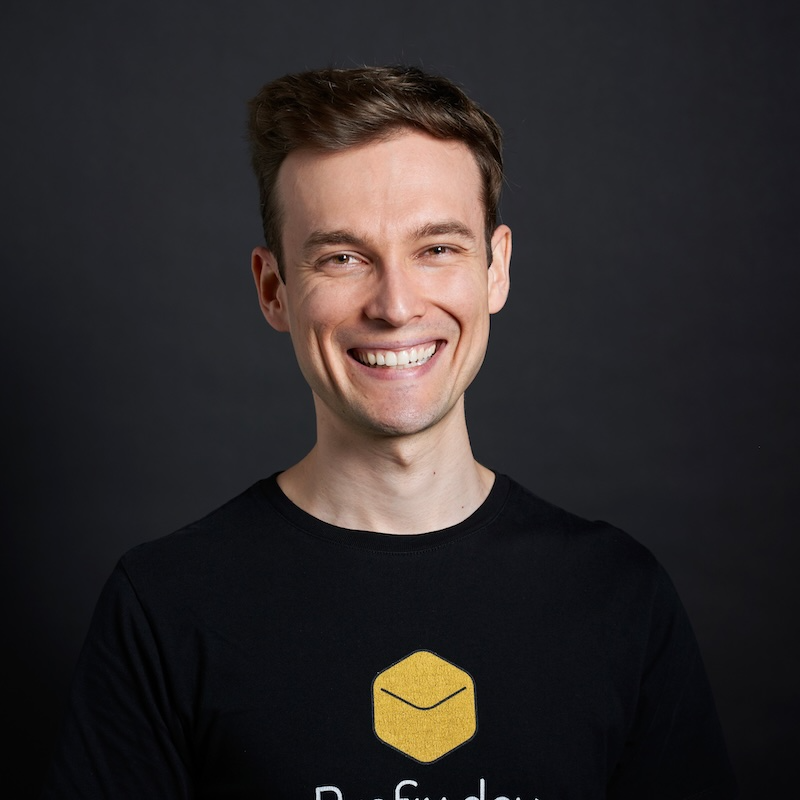
After studying Physics, Julian started his career in scientific computing at the water research institute Deltares in Delft where he worked on open source groundwater software. He also began contributing to the Linux desktop environment GNOME in his free time. Today he works at prefix.dev, the company behind the Pixi package manager and Rattler-Build. Prefix's mission is to make software packaging reproducible, secure, and functional across platforms. Both Pixi and Rattler-Build are used across scientific disciplines, from bioinformatics to high energy physics.